Mega Man Dual Override Differences From Classic Mega Man
What 40 years of Mega Man has earned, what the 2027 entry keeps, and what Dual Override actually changes.
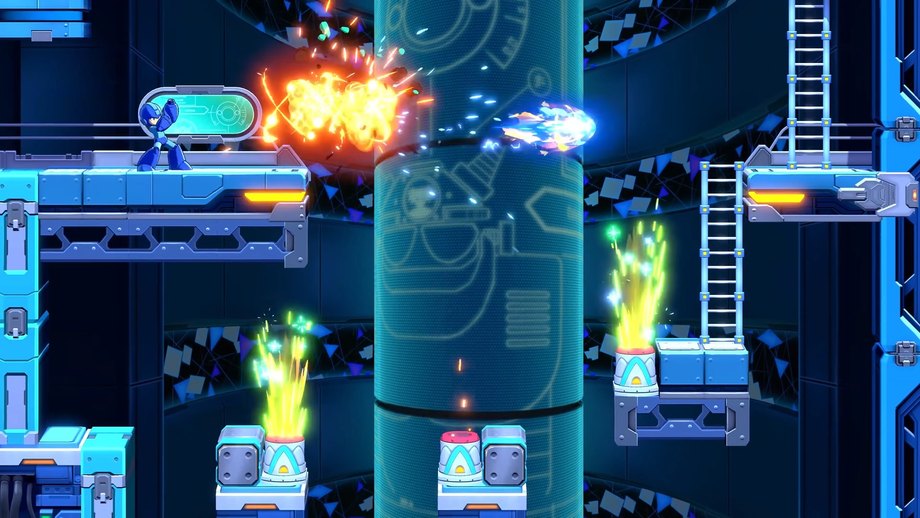
Mega Man Dual Override is the twelfth mainline Mega Man, even though the box does not say 12. New players and veterans will both wonder what stays the same and what changes. This page is the side-by-side read. It does not rank the games. It explains the structural choices the 2027 entry makes, where they come from in the older series, and where they are genuinely new.
If you have not touched a Mega Man since the NES era, start with Getting Started instead. If you are a veteran looking for the one or two changes that actually matter, this page is the answer.
What stays the same
The bones of classic Mega Man are still here. That is the first thing every preview confirmed.
- Eight Robot Masters on a 3x3 select screen. The grid shape is unchanged. Pick any portrait first, fight through the stage, steal the Special Weapon, repeat. The Robot Masters page is the grid itself.
- Special Weapons as the weakness loop. Defeat a Robot Master, take the weapon, use it against the next boss. The Special Weapons page is the loot list.
- Pickups and economy. E-Tanks return. Bolts return as the named collectible. Small heals drop from enemies. The Collectibles page covers the whole loop.
- Single-player campaign. No co-op, no live service. Every official press line agrees.
- Twin playable heroes. Mega Man and Proto Man, both Light Numbers, sharing the same campaign. The Proto Man guide explains the kit difference.
That is roughly sixty percent of the game. The remaining forty is what Dual Override actually adds.
What is genuinely new
RE Engine as the foundation
Every classic Mega Man since the original ran on custom Capcom engines, often shared with the rest of the franchise. Dual Override is the first mainline Mega Man built on RE Engine, the same middleware that powers Resident Evil Village and Devil May Cry 5. That brings three practical changes players will feel:
- 2D action staged in 2.5D space. Stages have parallax depth, lighting, and camera staging that the NES-to-3DS games did not have. The cap on perspective is still classic side-scrolling, but the lighting and motion capture are modern.
- Motion-captured boss animations. Previewers said the Robot Master intros and transitions looked closer to a fighting game than to a sprite cycle. Twinkle Girl’s bow and Astro Man R’s satellite orbits are good examples.
- A unified 2027 release window. One engine, one pipeline, one release year. That is a deliberate Capcom move. See Title and interviews for the production-team quotes.
3-area stages
Each Robot Master route is now three shorter areas instead of one long stage. The new shape is documented in Stage Structure and treated as the central pacing change of the campaign. Veterans who memorised the layout of Air Man’s stage will recognise the same rhythm but not the same geography.
Override and the burst meter
Mega Man 11 introduced Double Gear as a time-limited power spike. Dual Override replaces it with Override, a limiter release with a longer hangover. The Override System page is the deep read. The short version: Override is stronger but bills you for twenty seconds after, which changes how you spend it.
Custom Chips and the loadout layer
Every classic Mega Man since 9 included some kind of equippable passive. Dual Override’s Custom Chips are the most ambitious version of that idea. Three presets were demoed — Survival with barrier and an E-Tank, Attack with Double Charge Shot, No Chip with Rush Coil. The full build is expected to ship more presets, more chips, and more loadout combinations. The Custom Chips page tracks the system.
No number in the title
Dual Override is called Dual Override, not Mega Man 12. Producer Hiroyuki Minamitani explained in a Capcom Germany livestream that the missing number was intentional: the studio wanted new players to feel they could start at the 2027 entry without treating eleven prior games as homework. Veterans will recognise the references anyway. The Title and interviews page is the source.
Single-player only, but with more bosses per route
Classic Mega Man games never had co-op. Dual Override keeps that rule. But because of the 3-area template, the campaign ships more encounters than the 2D art suggests: roughly twenty-four named fights if every portrait follows the Twinkle Girl shape. The Robot Masters page lists the structure.
What is gone
Some older conveniences do not appear in public materials so far:
- No Mega Man 11-style Gear cooldown puzzles. Override has a hangover, but it is not the structured cooldown puzzle the 2018 game built its late-game fights around.
- No numbered subtitle. The number is gone, intentionally. Whether a future entry restores it is a Capcom marketing decision, not a development fact.
- No announced day-month 2027 date. The window is 2027. Press writes that treat any specific month as confirmed are not reading official materials.
The facts page is the wiki’s standing source of truth. If a system changes, that file changes with it.
What veterans will recognise
- The 3x3 select screen and the weakness-loop grammar.
- Buster as the default weapon. Special Weapons still cost weapon energy.
- E-Tanks and the per-area Bolt cadence.
- Slide and charge as the core movement kit.
- Proto Man as a parallel hero with a different buster kit.
- Returning Robot Masters as a love letter. Astro Man R is the first confirmed entry in that list.
What new players should know
If you have never played a Mega Man and you are starting with Dual Override in 2027, the experience will be:
- Pick a portrait on a 3x3 grid.
- Walk through three shorter areas, fight a giant, an older boss, and a new boss.
- Steal the new boss’s Special Weapon.
- Repeat against the next portrait, using what you stole as the weakness tool.
- Spend Override and Custom Chips on the rooms that need them, not on the rooms that happen to be open.
That is the campaign in five lines. The full breakdown is in Getting Started. The chip loadout read is in Custom Chips. The pacing read is in Stage Structure.
Where to go next
- New players: Getting Started, then Stage Structure.
- Veterans: Override System and Custom Chips.
- Lore fans: Robot Masters and Story.
- Shoppers: Platforms and Wishlist.
The honest summary: Dual Override is a classic Mega Man with new bones, not a new Mega Man wearing a classic label. The grid and the loop are the same. The engine, the stage shape, and the loadout layer are what changed.
Frequently Asked Questions
Quick answers pulled from Capcom's 2026 previews and official notes.
Is Dual Override the same as classic Mega Man?
Same bones, new layer. The 3x3 select screen, the Special Weapon loop, and the twin-hero campaign are unchanged. The engine, the 3-area stage shape, and the Custom Chip loadouts are what is new.
Why is it not called Mega Man 12?
Capcom dropped the number on purpose. Producer Hiroyuki Minamitani said new players should be able to start at the 2027 entry without treating eleven prior games as homework.
What engine does Dual Override use?
RE Engine, the same middleware that powers Resident Evil Village and Devil May Cry 5. It is the first classic Mega Man to ship on that engine.
Is it 2D or 2.5D?
Side-scrolling 2D action staged in a 2.5D space with parallax lighting and motion-captured bosses. The play is 2D; the visuals are 2.5D.
Does it have co-op?
No. Single-player campaign with two selectable heroes. Co-op is not announced and is not in the official materials.