Mega Man Dual Override Override System Explained
A burst meter that overclocks your robot, then bills you for the privilege.
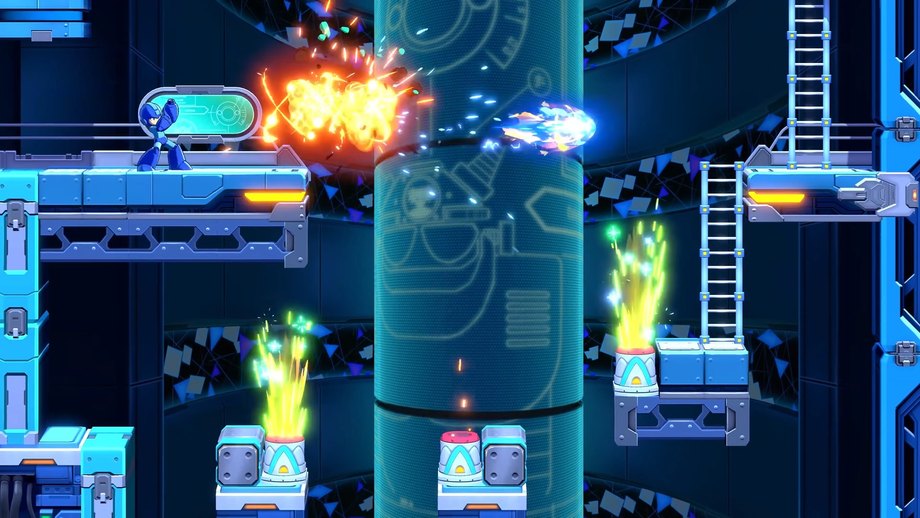
Override is the mechanic Dual Override is named after. Capcom describes it as a limiter release: for a short window a robot exceeds its normal output, then several functions drop below baseline. Director Shinya Ikuta has said the word Override in the title refers to this system, not only to the dual-hero marketing. If you take one advanced idea from this wiki, take this page.
Read it next to Custom Chips and Getting Started. Chips change how you enter a room. Override changes how you leave a boss half-dead or fully dead.
How the gauge actually fills
Press coverage from Gamescom 2026, including V Jump, agrees on the fuel rules. You build Override by defeating enemies and by taking damage. The gauge can stock up to three bars. How much you have banked when you activate the state changes how much energy you enter with. That means a clean room can still charge you, and a messy room can panic-charge you at the cost of health.
Unlike Mega Man 11’s Double Gear, Override in the demo did not require you to be near death. Once the gauge hits a usable amount, you can fire it at full health. Some chips may auto-trigger Override at critical health in the final build, but that is a reported possibility, not a confirmed default.
Also unlike Double Gear, the demo meter did not simply drain over time. It decreased as Mega Man attacked. Idle hovering inside Override is less wasteful than unloading the whole bar into empty air. That is a huge habit change for anyone who used Gear as a panic timer.
What Override does while it is live
During Override, Mega Man’s buster stops behaving like a polite pea shooter:
- Normal fire becomes small charge-shot bursts.
- A standard Charge Shot becomes a Double Charge Shot.
- Holding the charge longer produces a Final Charge Shot, the screen-filling blow that trailer clips use to delete bosses.
- Special Weapons can be fired without spending weapon energy, according to V Jump’s demo report.
Trailer and preview language also shows body panels opening, heatsinks glowing, and mobility options such as hover or a dashing charge depending on chips. Not every visual flourish is a separate button. Some of it is the Override costume of the same buster ladder.
Bosses can enter an Override state too. Twinkle Girl shouted the word during a phase change in press sessions. Capcom told interviewers that player Override is a free input, while boss Override uses different trigger conditions. Do not assume a boss is stuck in the same ruleset you are.
The hangover is the real skill check
When Override ends, Dual Override punishes greed. Press reports describe a roughly twenty-second vulnerable stretch in the demo. Custom Actions cannot be used. The Override gauge will not recharge during that window. Charge behavior and other functions run at reduced levels. You are the overheated robot the trailers joke about.
That is why this wiki keeps linking Override to difficulty options. A survival chip that grants a barrier will not save you if you dump Override in a hallway and then walk into a mid-boss overheated. Spend the state on a boss pattern you already understand, or on a platforming latch you cannot otherwise clear, then play small until the hangover ends.
Good spend examples from the public demo route:
- Twinkle Girl herself, who previewers called a glass cannon.
- Replica bosses such as Astro Man R, when you need a damage spike without learning a full weakness cycle yet.
- A late Area 2 gauntlet if chips did not already solve the room.
Bad spends: the first screen of an area, or any room that still has a checkpoint before a real fight. You will pay the hangover before the content that needed the power.
Override versus chips versus Special Weapons
Think of Dual Override as three stacked layers:
- Movement and buster basics, covered in Controls.
- Custom Chips, chosen before the area.
- Override, chosen in the moment.
Special Weapons still exist and still cost energy outside Override. The series identity has not been replaced. Chips and Override sit on top of the stolen-weapon loop. If you play Mega Man like Mega Man 11, you will recognize charge shots. If you play Proto Man, expect the same Override idea with a shield-led normal kit; Capcom has not published a separate Proto Override manual yet.
Practice plan before 2027
You cannot grind Dual Override yet, but you can train habits. Play any classic Mega Man and force yourself to save a limited resource for bosses instead of hallways. Watch the Gamescom 2026 footage and count how long the glowing state lasts versus how long the player is then stuck cooling down. When the next trailer lands, look for whether the three-stock gauge or the attack-based drain changed.
Until Capcom ships numbers on damage multipliers, treat Override as a boss tool with a hallway tax. The chip set ranking will tell you which preset makes that tax easier to pay.
Frequently Asked Questions
Quick answers pulled from Capcom's 2026 previews and official notes.
Does Override drain over time?
In the Gamescom demo it did not. V Jump reported the meter drops as you attack. Capcom could still tune this before 2027, so re-check the news hub after future trailers.
Can I use Override at full health?
Yes in the demo. It does not require a low-health trigger the way Mega Man 11's Double Gear often felt. Some chips may auto-fire it later.
What is Final Charge Shot?
A fully held charge during Override, stronger than the Double Charge Shot. Preview clips use it as a boss-deleting blow. See Beat Twinkle Girl for when that spend is worth the hangover.
Do bosses use Override?
They can enter an Override state. Capcom says their trigger conditions differ from the player's free activation.
Does Proto Man get Override too?
Official copy says robots can release their limiter. Proto Man is a playable robot, so plan on sharing the system even while his shield kit stays unique. Details: Proto Man guide.