Mega Man Dual Override Boss Order & Stage Select
How the classic 3x3 grid survives into 2027, and how to plan your first run before Capcom names the other seven.
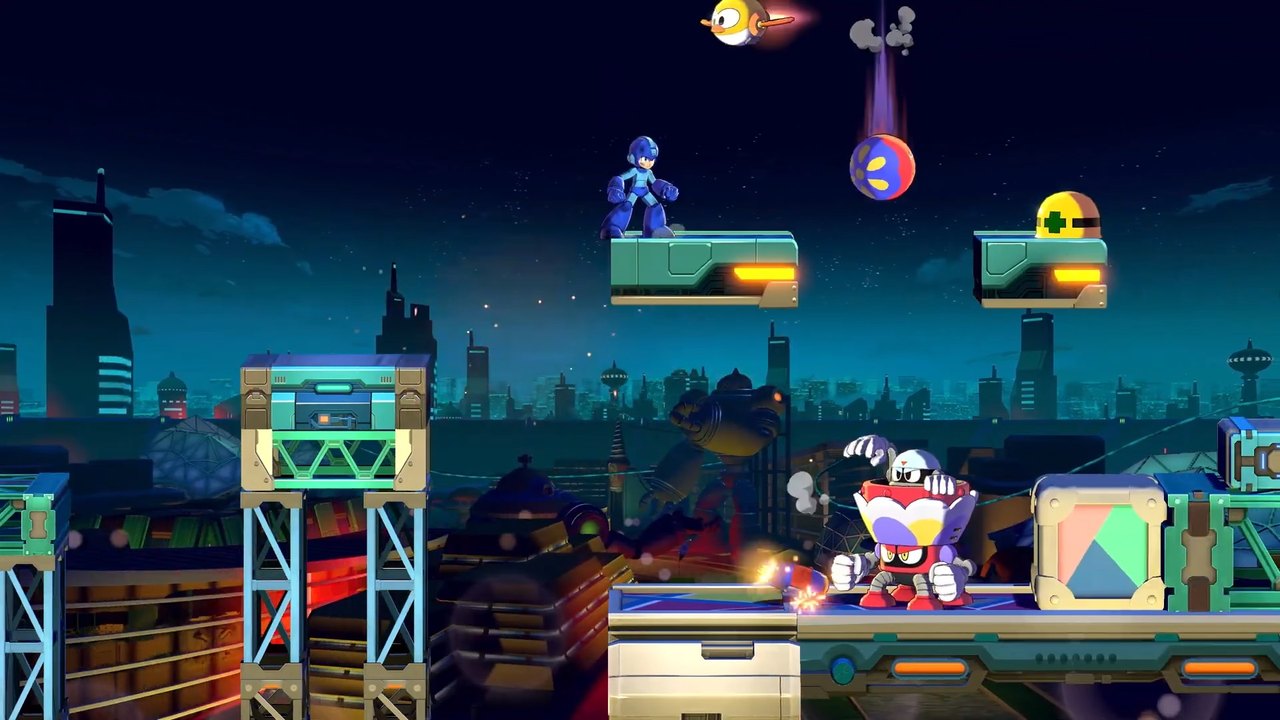
Mega Man Dual Override keeps the most stubborn UI in the series: a 3x3 select screen of Robot Master portraits, with the boss of each stage written under the picture, and a recommended or player-chosen order laid out around the perimeter. What changes in 2027 is that each portrait now hides three areas, and one of them is a returning R-replica from an older Mega Man. Boss order still matters, but it now means “which three-arc set you clear first,” not just which portrait.
This page is the system primer. The Robot Masters page tracks the roster. The Beat Twinkle Girl page is the one full route. The Special Weapons page is the loop that makes order matter.
How the 3x3 grid still works
In Mega Man 2 to 11, the 3x3 grid lets you pick any of the eight Robot Masters first, with the bottom-right slot reserved for the fortress / Wily stage once you have cleared enough portraits. Your choice of order mattered for two reasons: the weapons you steal from earlier bosses give you tools for later ones, and the stage design of earlier bosses gives you the muscle memory for later ones.
Dual Override keeps the 3x3 surface. The bottom-right slot is the question of the day. Capcom has not confirmed whether the 2027 grid still ends in a Dr. Wily fortress, an extra Robot Master dungeon, or a direct Override-themed finale. The story page refuses to invent that until Capcom prints it. For now, treat the grid as a real eight-portrait exam, with the ninth slot still in the dark.
What Dual Override adds is that each portrait now hides three shorter areas. That is the new variable in boss order. You are not just clearing a stage and getting a weapon. You are clearing a giant-enemy mid-boss, an R-replica Robot Master from a prior game, and the new portrait itself, before the weapon-steal.
Why order still matters in 2027
Order matters in classic Mega Man because weapons are not free. The Special Weapon from your first boss is a key against the weakness of your second boss. Going in a poor order means re-doing rooms because you do not have the right tool, or worse, clearing portraits while burning weapon energy against enemies who are not weak to it.
Dual Override’s three-area template changes the trade-off, but does not remove it. Three observations from the public demo route on Twinkle Girl:
- Area 1 ends on a giant enemy with a simple pattern. The buster was enough on the default settings. Spending Override here is wasteful.
- Area 2 ends on Astro Man R, a replica of Mega Man 8’s Astro Man with new attacks on top of the original pattern. Writers called this the spike. Chips mattered more than Override here.
- Area 3 ends on the new Robot Master. Override was the right spend, and the boss was a glass cannon once you stayed aggressive.
The implication: even without a published weakness chart, the optimal order may still be to clear the easier Area 1 giants first, save the harder mid-boss exams for when you have your chips warm, and time Override for the finale. That is a classic Mega Man habit with a Dual Override tempo. Custom Chips change this calculus, but they do not erase it.
Recommended order before all portraits are known
The honest answer is that there is no full boss order yet. Capcom has named one of the eight Robot Masters, with seven more silhouettes. What you can do today, before 2027 ships, is plan as if the rest follow Twinkle Girl’s three-area template:
- Clear two early portraits to stock two Special Weapons. The first portrait teaches the chip presets and the Override timer. The second portrait teaches the three-area pacing.
- Use the third and fourth portraits to build chip variety. Pick the chip you did not try on the first two runs.
- Save the last four portraits for when you have Override timing and a working chip rotation. These are the rooms where a panic Override will feel expensive.
- Treat the bottom-right slot as the final exam. The full campaign will tell you whether it is a fortress, a single boss rush, or a story-mode Override moment.
That is not a weakness chart. It is a plan for reading the grid. When Capcom names the other seven Robot Masters, the Robot Masters page will absorb them, and the news hub will date the reveal.
The replica-Robot-Master wrinkle
Dual Override’s three-area structure puts a returning R-replica in the middle slot. The pattern so far is Astro Man R in Twinkle Girl’s Area 2. Capcom has not said whether every portrait gets one. If they do, your boss order is partly a history exam: knowing Mega Man 8 Astro Man is not required, but a player who recognises the pattern is going to have a head start.
A reasonable read: the 2027 grid will rotate in classic Robot Masters from Mega Man 1 through 11, the same way the game already imports 2.5D polygons and motion-captured boss animations from the rest of the series. The R-suffix is a courtesy to veterans, not a strict dependency. New players can finish Area 2 without knowing the original. Veterans will finish it faster.
The Robot Masters page is the right place to track which R-replicas are confirmed. As of the public demo, the answer is one: Astro Man R. This page does not chase fan-cast rosters.
What to do if the grid surprises you
Capcom has not ruled out an option that would have changed classic Mega Man: a non-linear grid, a chapter select, or even a proto-Man-only path. If 2027 ships with one of those, the recommended order above is wrong. The 3x3 grid is the historical read, not a confirmed 2027 read.
If the grid surprises you:
- Return to the Robot Masters page and check what the new structure implies.
- Re-read the Getting Started page. The campaign loop is what changes when the grid changes.
- Trust the news hub for dated recaps, not social posts.
How this page stays honest
- It does not name a weakness chart. Capcom has not published one.
- It does not crown a recommended order. The grid is half-silhouettes.
- It does not assume Dr. Wily is the ninth slot. The story and grid are both still open.
- It does not rank portraits on Twitter-style “who would win” arguments. That is fan content, not a wiki page.
What this page is: a clear read of how the 3x3 grid survives into Dual Override, what the three-area template does to boss order, and how to plan a first run in 2027. Pair it with the Twinkle Girl fight guide for the one complete exam, and with the chip set ranking for the loadout side. The 2027 grid will reward the same planning habit every classic Mega Man has: clear, learn, adapt, repeat.
Frequently Asked Questions
Quick answers pulled from Capcom's 2026 previews and official notes.
Is there a 3x3 grid in Dual Override?
Yes. The select screen is the classic 3x3 layout. Each portrait now hides three shorter areas instead of one long tunnel. The bottom-right slot is still unconfirmed.
Does boss order matter in 2027?
Yes. Special Weapons are still the spine of the loop. Order still affects which tools you bring into which boss. Override adds a timing tax, but does not erase the trade.
What is the R-replica in Area 2?
The known one is Astro Man R, a replica of Mega Man 8's Astro Man with new attacks. Whether every portrait gets an R-replica is unconfirmed.
Is there a recommended order?
Not a full one. Seven of the eight Robot Masters are silhouettes. Plan around learning chips and Override timing first, then lean into the harder mid-boss exams later.
Where do I see the R-replica list?
The Robot Masters page. This page is the planning primer, not the roster.